
Flue Gas Stack and Breeching Lining
We rebuilt and lined a flue gas stack and breeching that had thinned where acidic condensate attacked the steel below the dew point.
The challenge
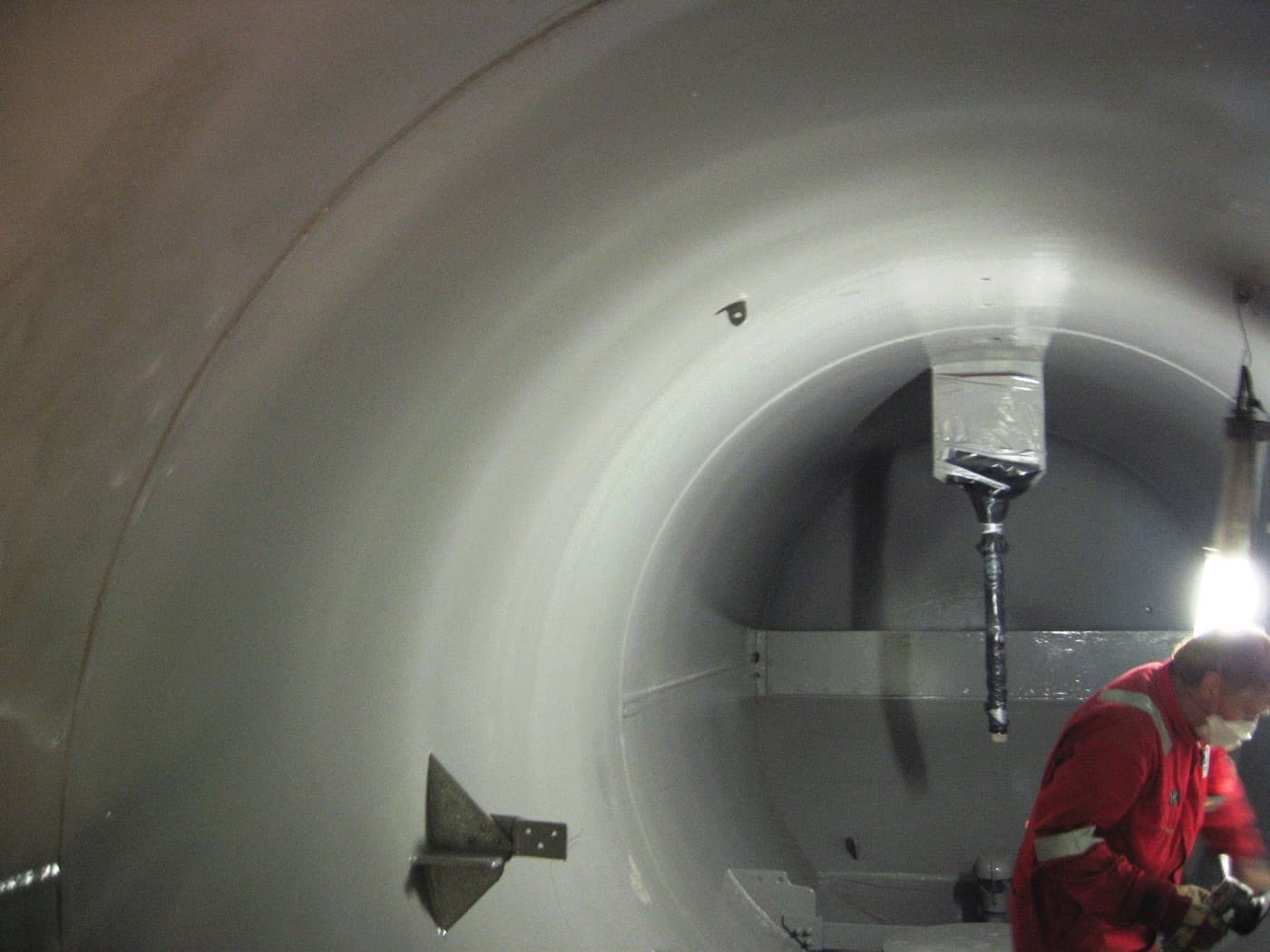
The flue gas stack and the breeching feeding it had corroded where flue gas cooled below its dew point and acidic condensate formed on the wall. The attack concentrated along the seams and at the cold spots, and the steel there had thinned to the point that pinholes were starting to open. Once a stack or breeching starts to perforate at the cold spots, the gas finds the path of least resistance, the holes grow, and the unit can no longer carry the flue gas safely. Patching over the thin metal does nothing if the condensate keeps reaching bare steel, so the wall had to be both rebuilt and protected from the acid that caused the loss in the first place.
Our approach
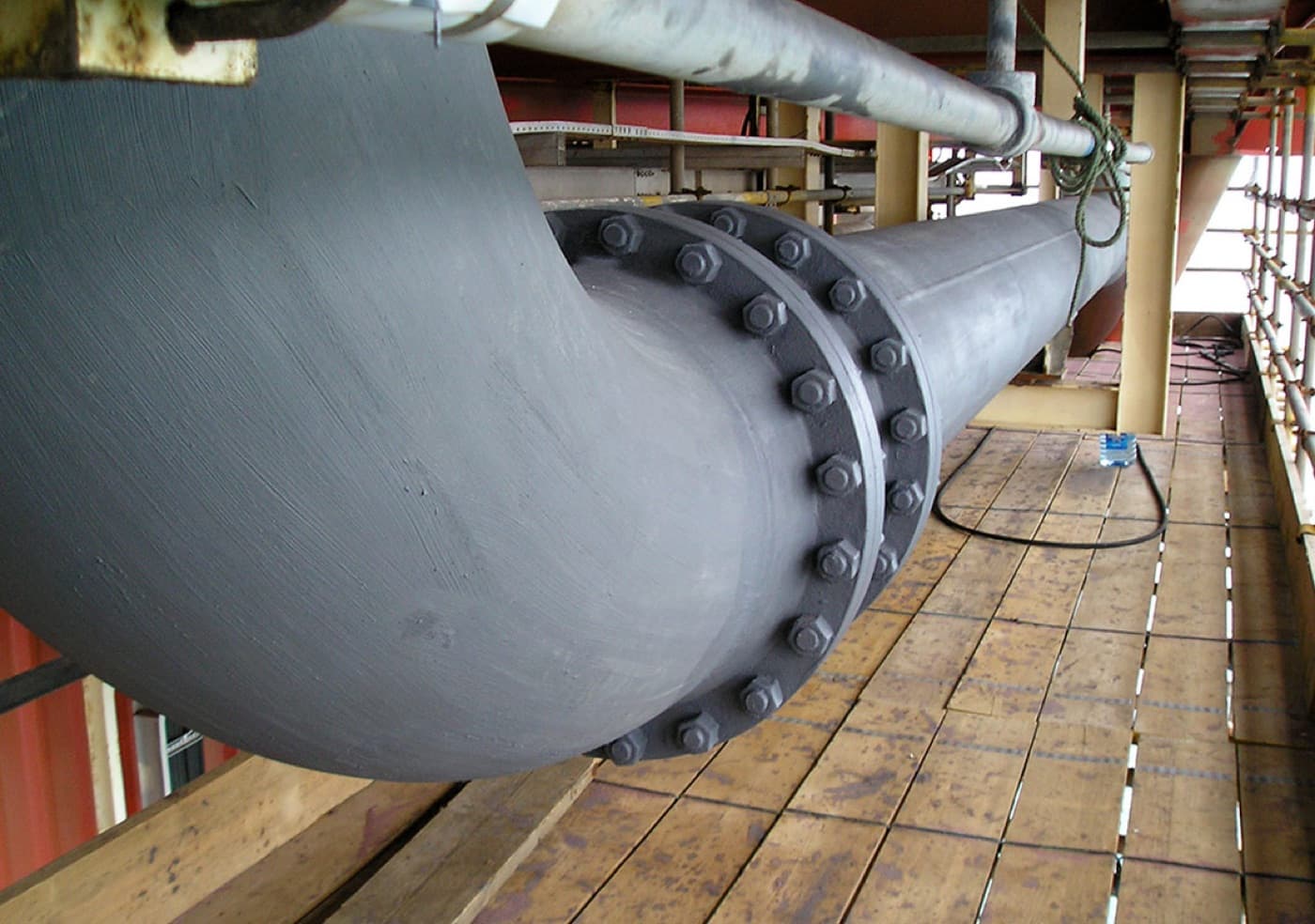
We treated this as one continuous repair, not a series of patches, because the condensate does not respect a patch edge. First we got the affected internals back to clean, sound metal so the composite and the coating had something to grip. Where the plate and the seams had thinned, we rebuilt the lost section with composite so the wall carried its load again. Then we put down a coating chosen for the operating temperature and for the acidic condensate it would sit in, taking it across the rebuilt steel and the surrounding sound steel as one film. The rebuilt metal carries the structure and the film keeps the condensate off the wall, so the acid no longer reaches the steel at the cold spots where it had been eating through.
- Assess the lossWe surveyed the stack and breeching internals to map where the steel had thinned along the seams and at the cold spots below the dew point.
- Blast to clean metalWe abrasive blasted the affected internals back to clean, sound steel with the profile the rebuild and coating needed.
- Rebuild the wallWe rebuilt the thinned plate and seams with a metal repair composite from the 1000 Series so the wall regained its section.
- Line for temperature and acidWe applied a high temperature coating rated for the operating temperature and the acidic condensate across the rebuilt and sound steel as one continuous film.
- Return to serviceWe confirmed the rebuild and the coating cured to spec before the breeching and stack were put back into flue gas service.
The result
- The rebuilt steel and the coating keep the acidic condensate off the wall, so the metal no longer thins at the cold spots.
- The breeching and stack carry the flue gas without the pinholing that had started at the seams.
- The repair was done in situ, so the unit went back to service without cutting out and replacing the corroded sections.
- The work was carried out by factory-trained and factory-certified Belzona applicators.
Belzona systems used
In the field
Seeing something like this?
Our Louisiana team will survey your equipment and recommend the right cold-applied Belzona system — supply, apply, or both, with 24-hour support.